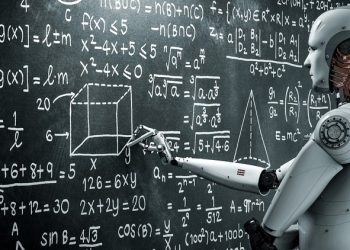
The world has a gender equality problem and nowhere is it more often mirrored than Artificial Intelligence (AI).
Globally more women are accessing the internet every year, but in low-income countries, only 20% are connected. The gender digital divide creates a data gap reflected in the gender bias in AI. Who creates AI and biases built into AI data (or not), can perpetuate, widen or reduce gender equality gaps.
Young women participants work together on a laptop at during an African Girls Can Code Initiative’s coding boot camp held at the GIZ Digital Transformation Center in Kigali, Rwanda in April 2024
What is AI gender bias?
A study done at the Berkeley Haas Center for Equity, Gender and Leadership analysed 133 AI systems across different industries and found that about 44% showed gender bias with 25 % exhibiting both gender and racial bias.
The Age Old Sexual Biased in the New
Beyza Doğuç, an artist from Ankara, Turkey, encountered gender bias in Generative AI when researching ideas for a novel and prompted it to write a story about a doctor and a nurse. Generative AI creates new content (text, images, video, etc.) inspired by similar content and data it was trained on, often in response to questions or prompts by a user.
AI made the doctor male and the nurse female. Doğuç continued to give it more prompts and the AI always chose gender stereotypical roles for the characters and associated certain qualities and skills with male or female characters. When she asked the AI about the gender bias it exhibited, the AI explained it was because of the data it had been trained on and specifically, “word embedding” – meaning the way certain words are encoded in machine learning to reflect their meaning and association with other words – how machines learn and work with human language. If the AI is trained on data associating women and men with different and specific skills or interests, it will generate content reflecting that bias.
“Artificial intelligence mirrors the biases that are present in our society and that manifest in AI training data,” – Beyza Doğuç, in a recent interview with UN Women.
Insights from Females Who Broke the Rules
Who develops AI and what kind of data it is trained on, has gender implications for AI-powered solutions. Sola Mahfouz, a female quantum computing researcher at Tufts University, is excited about AI, but also concerned. “Is it equitable? How much does it mirror our society’s patriarchal structures and inherent biases from its predominantly male creators?
Mahfouz was born in Afghanistan, where she was forced to leave school when the Taliban came to her home and threatened her family. She eventually escaped Afghanistan and immigrated to the U.S. in 2016 to attend college.
Natacha Sangwa is a student from Rwanda who participated in the first coding camp organized under the African Girls Can Code Initiative last year. “I have noticed that [AI] is mostly developed by men and trained on datasets that are primarily based on men,” said Sangwa, who saw first-hand how that impacts women’s experience with the technology. “When women use some AI-powered systems to diagnose illnesses, they often receive inaccurate answers because the AI is not aware of symptoms that may present differently in women.” (Watch Sangwa’s TikTok talk about her journey at the link above)
If current trends continue, AI-powered technology and services will continue lacking diverse gender and racial perspectives and that gap will result in lower quality of services, biased decisions about jobs, credit, health care and more. As companies are scrambling for more data to feed AI systems, researchers from Epoch claim that tech companies could run out of high-quality data used by AI by 2026.
How to Avoid Gender Bias in AI?
Removing gender bias in AI starts with prioritising gender equality as a goal, when AI systems are conceptualised and built. This includes assessing data for misrepresentation, providing data representative of diverse gender and racial experiences and reshaping the teams developing AI to make it more diverse and inclusive.
According to the Global Gender Gap Report of 2023, there are only 30%women currently working in AI. “When technology is developed with just one perspective, it’s like looking at the world half-blind,” Mahfouz said. She is currently working on a project to create an AI-powered platform to connect Afghan women with each other.
“More women researchers are needed in the field. The unique lived experiences of women can profoundly shape the theoretical foundations of technology. It can also open new applications of the technology,” she said.
“To prevent gender bias in AI, we must first address gender bias in our society,” said Doğuç from Turkey.
Critical Need for STEM and ICT Education
There is a critical need for drawing upon diverse fields of expertise when developing AI, including gender expertise, so that machine learning systems can serve us better and support the drive for a more equal and sustainable world. In a rapidly advancing AI industry, the lack of gender perspectives, data and decision-making can perpetuate profound inequality for years to come. The AI field needs more women, and that requires enabling and increasing girls’ and women’s access to and leadership in STEM and ICT education and careers.
The World Economic Forum reported in 2023 that women accounted for just 29%of all science, technology, engineering and math (STEM) workers. Although more women are graduating and entering STEM jobs today than ever before, they are concentrated in entry level jobs and less likely to hold leadership positions.