Thabo Mohlala
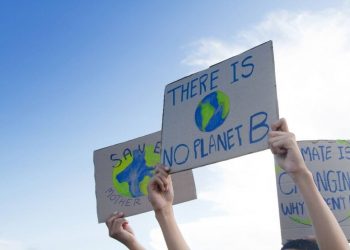
Climate experts reckon that the next important issue the world should focus its attention on is global warming. They further call for countries to display the same level of unity and collaboration seen during the fight against Covid-19 to drastically reduce activities that contribute to the emission of greenhouses gases.
Dr. Samson Mohomane is among the new crop of young professionals who are willing to lend a hand to any initiatives aimed at curbing further deterioration of the climate. Not only is he passionate but he is also prepared to share his newly-acquired knowledge and research skills having been recently conferred with a Doctor of Philosophy (PhD) degree in chemistry during a virtual graduation ceremony at the University of Zululand (Uni Zulu).
Since his childhood in QwaQwa in the Free State 36 years ago, Dr. Mohomane was always intrigued by science and this fascination was further cemented when he started high school where he got to understand that chemistry is at the core of natural science.
Dr Mohomane said he learned that without chemistry, it would be virtually impossible to understand how atoms and molecules behave, which is key in solving many chemical reactions. “I knew that I needed to study chemistry if I was to understand how plastics behave, how water is purified and how to find cure(s) for many diseases,” he recalled.
His mission is to overhaul the entire building sector with his eco-friendly brick, produced by using sugarcane bagasse. The focus of his PhD study was to investigate if cement could be replaced by an alternative, low carbon material during the manufacturing process of bricks. The product is about to be patented with relevant authorities.
“The main aim was to address the challenges experienced by the agricultural and industrial sectors in terms of minimising unmanaged waste during their production. The key innovation was based on interrupting the macromolecular structure of sugar cane bagasse to develop green bricks and possible polymer composites for the future green products,” he said.
The outcomes of his research demonstrated that the by-product of sugarcane bagasse has a potential to be utilised, in conjunction with other green fillers, to develop appropriate mortar in order to develop competent and sustainable bricks.
The bricks developed possessed acceptable masonry properties such as compressive strength, water absorption and passed durability tests as required by various national standards. This mortar has the potential to produce product groups that have similar production characteristics as bricks.
So far preliminary results are promising, paving a way for Dr Mohomane’s product to be patented. Professor Tshwafo Motaung, one of the graduate’s supervisors, said once all the tests are re-produced consistently and successfully, a patent will be registered in line with UNIZULU policies. Said Professor Motaung: “Meetings between stakeholders (UNIZULU and Tongaat Hulett) are being held to determine a potential of free enterprise from the product and future plans. This is just one of practical solution-based projects we are implanting and doing at UNIZULU.”
Dr Mohomane also boasts a record of published works which include seven published articles in journals and five book chapters. “The articles and book chapters were a true reflection of the amount of work that we put in with my supervisors. I got endless invitations (from) journals to submit my work after they read the first novel article that I published,” he said.
He said although obtaining his PhD was an arduous task; he is grateful he was able to pull it off thanks to the endless guidance of his supervisors, Prof Motaung, Prof Sandile Songca and Dr Linda Linganiso, Mohomane.
Dr. Mohomane also thanked his supervisors, the staff of the department of chemistry at Nelson Mandela University, for helping him with preparing and characterising his samples. He also acknowledged the staff of the department of civil engineering at the University of Johannesburg, for their input and conducting the compressive testing of the bricks in their laboratory.
On the whole Dr. Mohomane said his academic journey was worth every effort. He said in the process of his study he was able to gain valuable skills, including among others, honing his researching skills and getting exposure to the art of writing business and research proposals, commercialisation of products, sourcing funding and conducting presentations.
In addition, he also learned a new language (isiZulu) and culture as this was his first time studying outside of his home province, Free State.