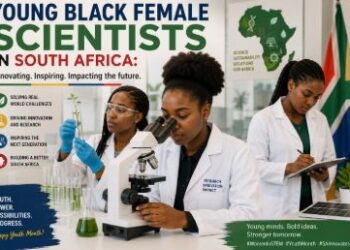
By The African Academy of Sciences
Women scientists have a vital part to play in scientific leadership and in contributing to Africa’s development and transformation, but they remain substantially under-represented in higher education and in science, technology engineering and mathematics (STEM) careers, accounting for only 28% of science researchers, while their male counterparts dominate this field with a total of 72% of men engaged in STEM careers.
This has meant that there is a lack of gendered and diverse perspectives essential to addressing gender dimensions on issues like the burden of infectious diseases, which often disproportionately affect women, according to the World Health Organization.
Cognizant of the gender disparity in STEM, the AESA platform (Alliance for Accelerating Excellence in Science in Africa – a partnership of the African Academy of Sciences (AAS) and African Union Development Agency (AUDA-NEPAD)) with support from IAVI, a nonprofit scientific research organization, undertook a study to examine factors which contribute to or inhibit women from pursuing STEM careers in Africa.
The three main barriers curtailing the participation of women in science are:
• Family responsibilities: this is the most dominant reason, women have to manage family responsibilities, which leads to difficulties in finding work-life balance.
• Societal patriarchal attitudes: hegemonic masculinity influenced by socio-cultural values and beliefs discourages women from pursuing STEM careers. Majority of girls prefer to study art, biology and geography subjects while 76% agreed that discrimination of women in decision-making positions dissuades women from pursuing STEM careers.
• Unconducive work environments and remuneration: women must overcome biased stereotypes and constantly need to prove themselves, that they are as capable as their male counter parts. Other concerns are that although women get recruited on merit, about 56% are not remunerated as per their qualification.
“Globally, far fewer women are principal investigators on urgent research and development projects, including HIV vaccines. This trend is particularly pronounced in developing countries, where women and girls are disproportionately affected by HIV, tuberculosis, and emerging infectious and neglected diseases,” said Yolanda Moyo, Senior Director, Advocacy and Policy, IAVI. “Together with AAS and with support from the U.S. Agency for International Development, IAVI is pleased to launch this report that will hopefully speed up actions to close the gender gap in the STEM fields”
“To bridge the gender gap for African women in science we need to ensure both policy and programmatic measures are institutionalised to safeguard gender equity in STEM especially in the education system and workplaces,” said Allen Mukhwana, AAS Research Systems Manager.
There is need for a multipronged approach to address the challenges that women face in their quest to pursue STEM courses and succeed while in practice. The study draws out five recommendations that need to be addressed to level the playing field and encourage gender equality in sciences.
• Policy options that target the role of parents and the home environment: provide opportunities for parents to have enough information and social support that they require to assist their children in making decisions on STEM.
• Policy options that target the school environment: fair representation of both gender with reference to the teaching staff of STEM courses. In addition to this, higher education institutions need to award targeted scholarships for women as a booster to the numbers.
• Policy options that target international agencies: these agencies should consider gender equity when awarding grants, especially research grants. The current scenario is gender biased in favour of men which means that less women are likely to grow and compete at higher levels of STEM excellence.
• Workplace policies: proper remuneration of female employees working in STEM is a vital component that needs to be observed by employers for women to be successful in STEM. Employers should also ensure that there is fair representation of women at all levels at work.
• African government policies: African governments need to advocate for and create opportunities for girls to be supported in their pursuit of STEM courses, measures like increasing the budgetary allocation to the education sector will go a long way in increasing the number of women in STEM. There also needs to be deliberate efforts in recruiting women in governance and decision-making positions.
Interventions to ensure comprehensive support structures for women in STEM need to be anchored in law through relevant policies to safeguard gender equity in STEM both in the education system and workplaces.
“Equipping more African women and girls to engage in global health product development and testing should be prioritized as part of a global strategy to defeat COVID-19 as well as ongoing epidemics such as HIV and tuberculosis,” said Kundai Chinyenze, M.D., executive medical director, IAVI. “An inclusive approach is vital to guarantee global access to future vaccines and biomedical innovations as the tools will have been designed by and for the diverse populations to benefit – including women and girls.”