A significant meteorite fall in South Africa’s Eastern Cape Province on Sunday, 25 August 2024, which sparked a collaborative scientific investigation involving several leading universities. The event, witnessed by residents across a vast area, has led to the recovery of a rare meteorite fragment, provisionally named the “Nqweba Meteorite” after the nearby town of its discovery.
At 8:51 am on the day of the event, residents from regions as distant as the Garden Route, the Karoo, and provinces of the Western Cape and Free State observed a bright blue-white and orange streak of light in the sky. The meteorite, after splitting into several smaller fragments, disappeared from view. Shortly after, witnesses reported hearing loud explosions and sensing vibrations.
Nine-year-old finds warm meteorite
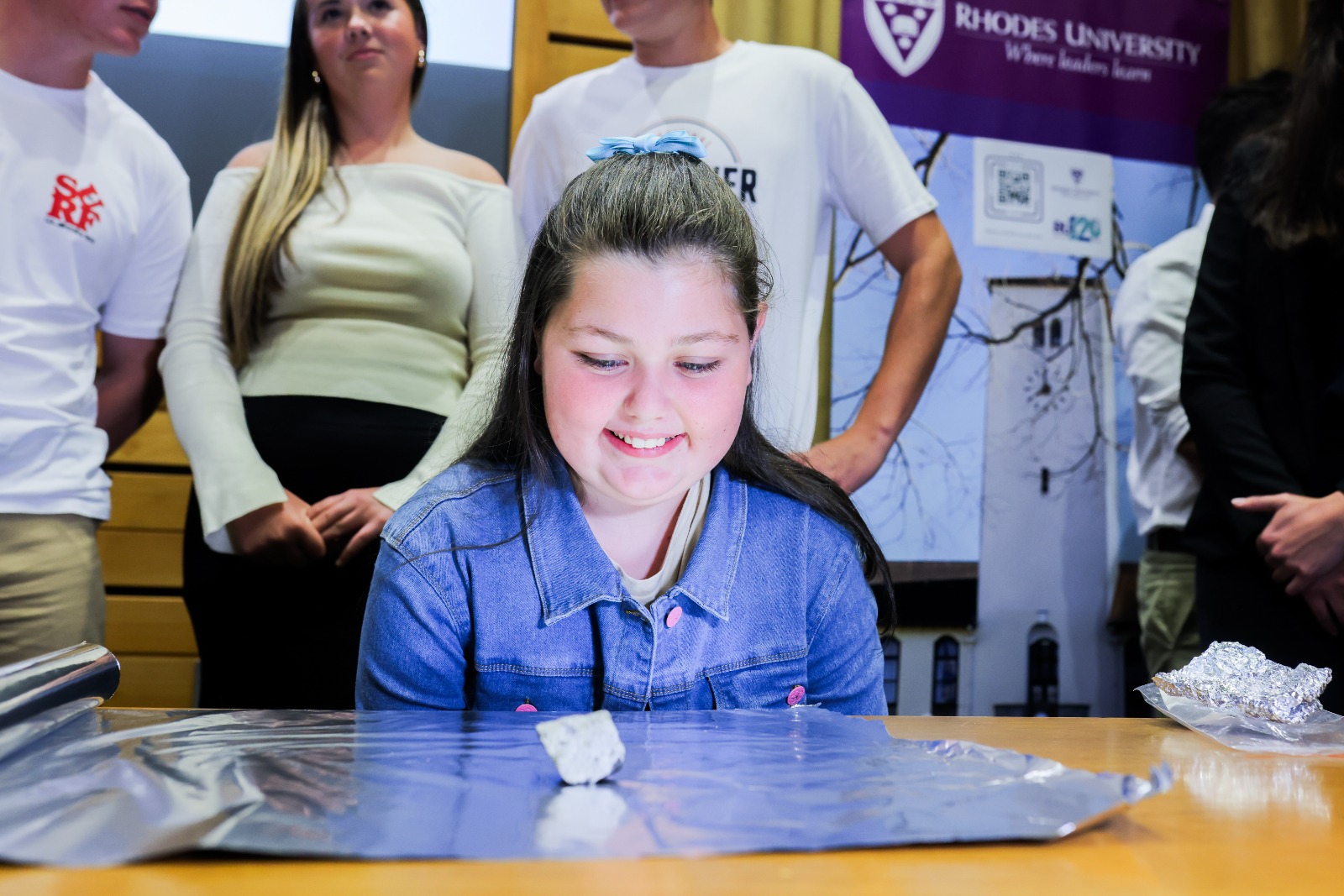
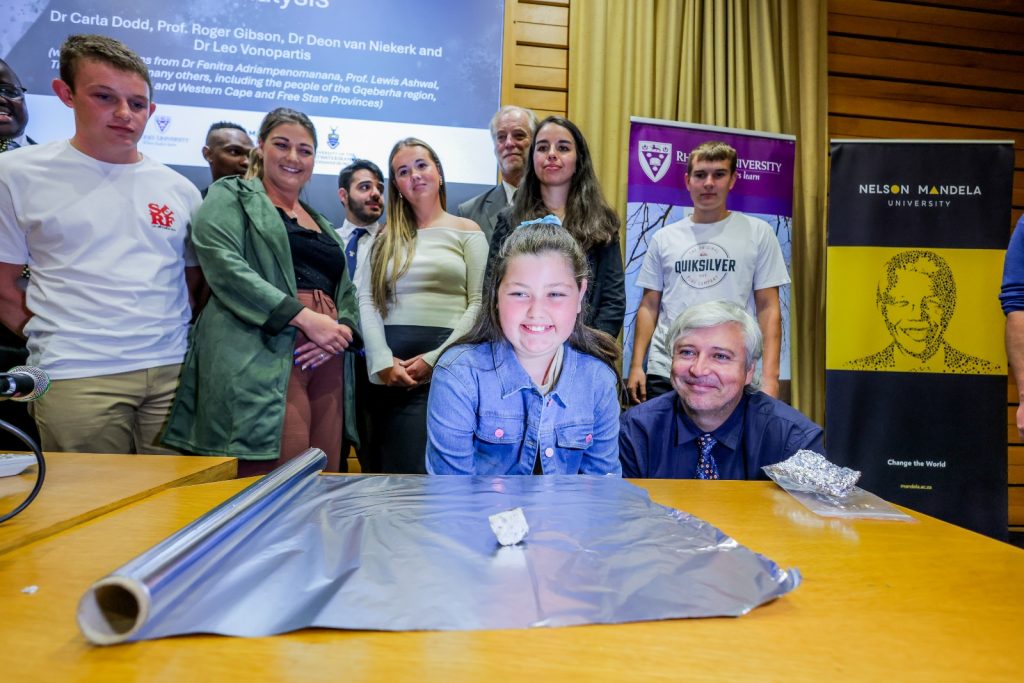
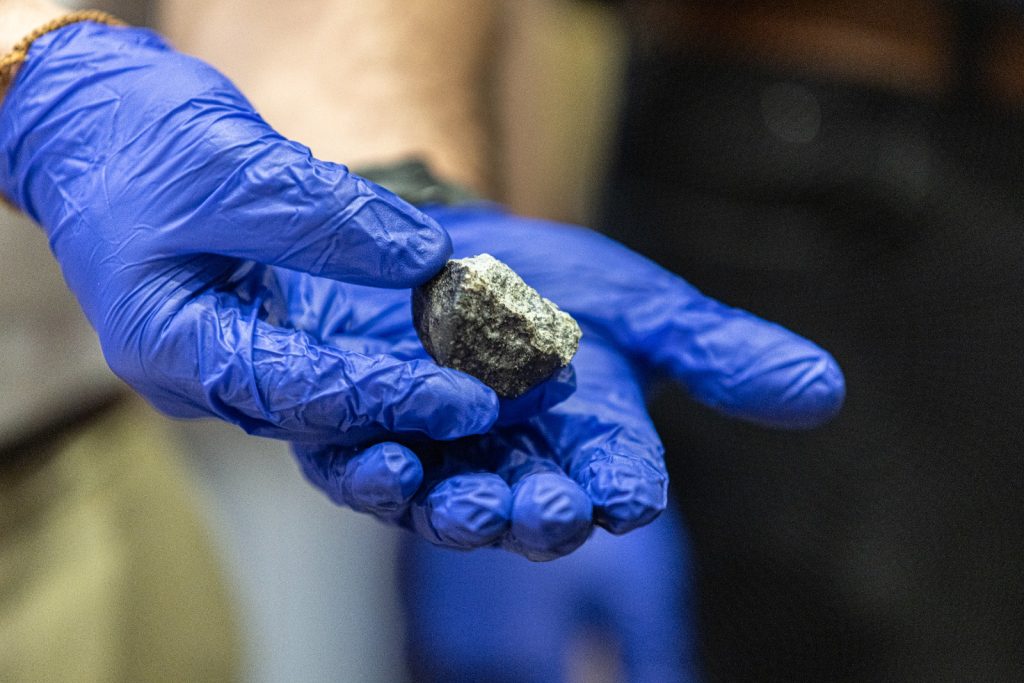
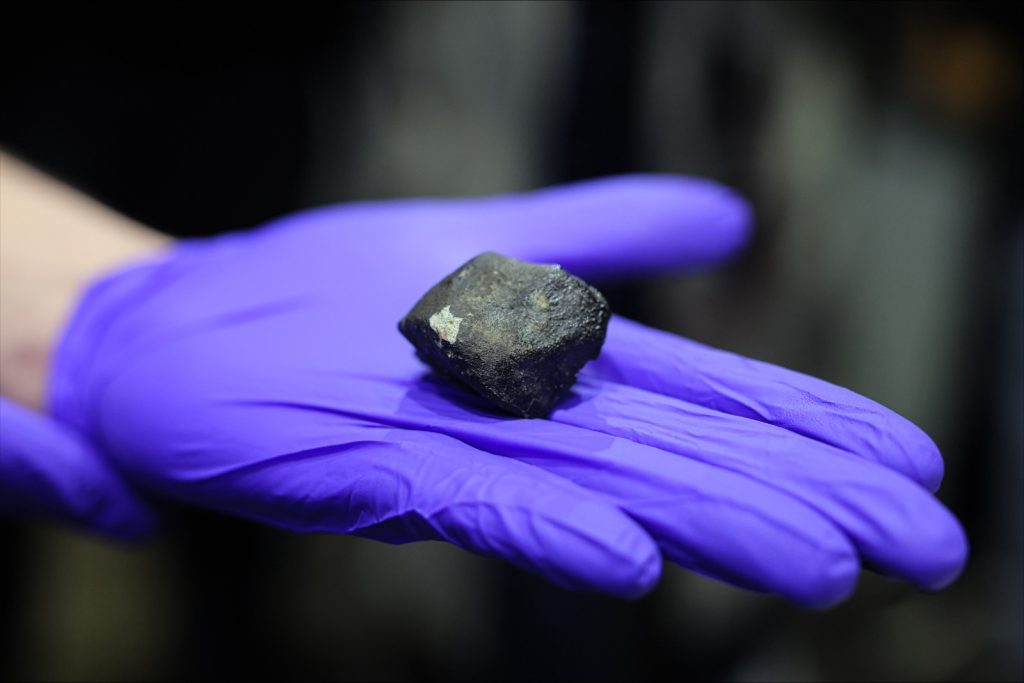
Nine-year-old Eli-zé du Toit, while sitting on her grandparents’ porch in Nqweba, saw a dark rock fall from the sky and land near a Wild Fig tree in the garden. The rock, black and shiny on the outside with a light grey, concrete-like interior, was still warm when she picked it up.
Scientists respond
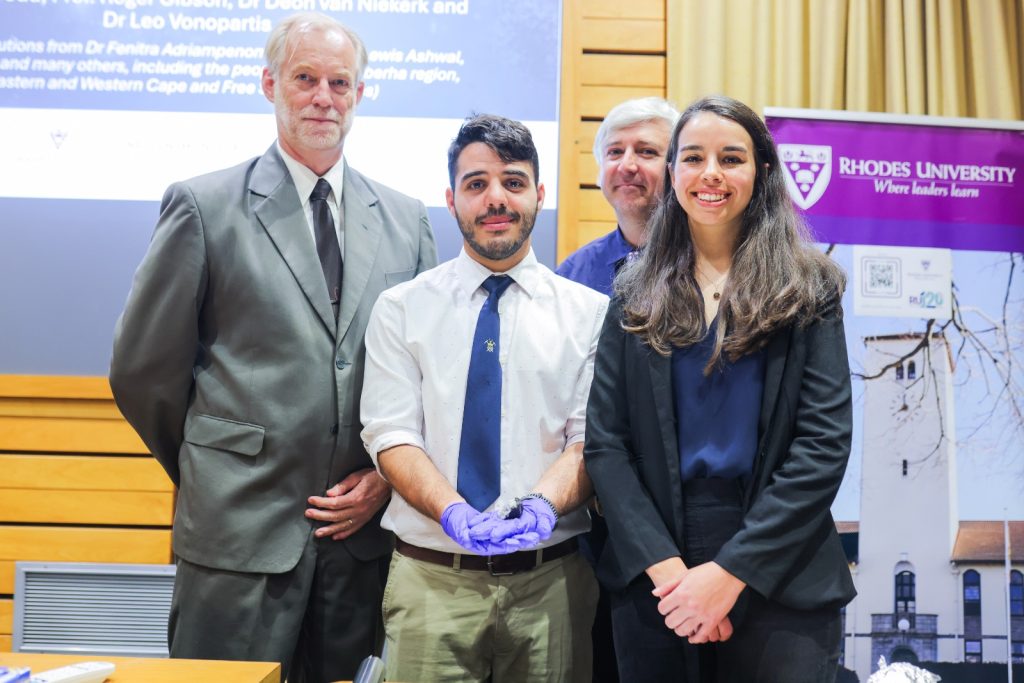
Dr Deon van Niekerk from Rhodes University obtained a permit from the Eastern Cape Provincial Heritage Resources Authority to recover all fragments from this meteor for scientific analysis.
Dr Carla Dodd from Nelson Mandela University (NMU), upon learning of the meteorite’s discovery, quickly secured the sample collected by Eli-zé, recognising the rarity and importance of such a find.
Professor Roger Gibson from the University of the Witwatersrand (Wits) says: “Our response time was going to be critical if we were going to collect valuable scientific data and meteorite fragments, as well as to explain to the local public that this was a natural event and how the individual parts linked together.”
Dr Leonidas Vonopartis from Wits University agrees: “Events such as these are incredible and are very exciting, both for the public who witness these falls and the scientists who gain invaluable information from studying the bolides and rocks.”
About the Nqweba Meteorite
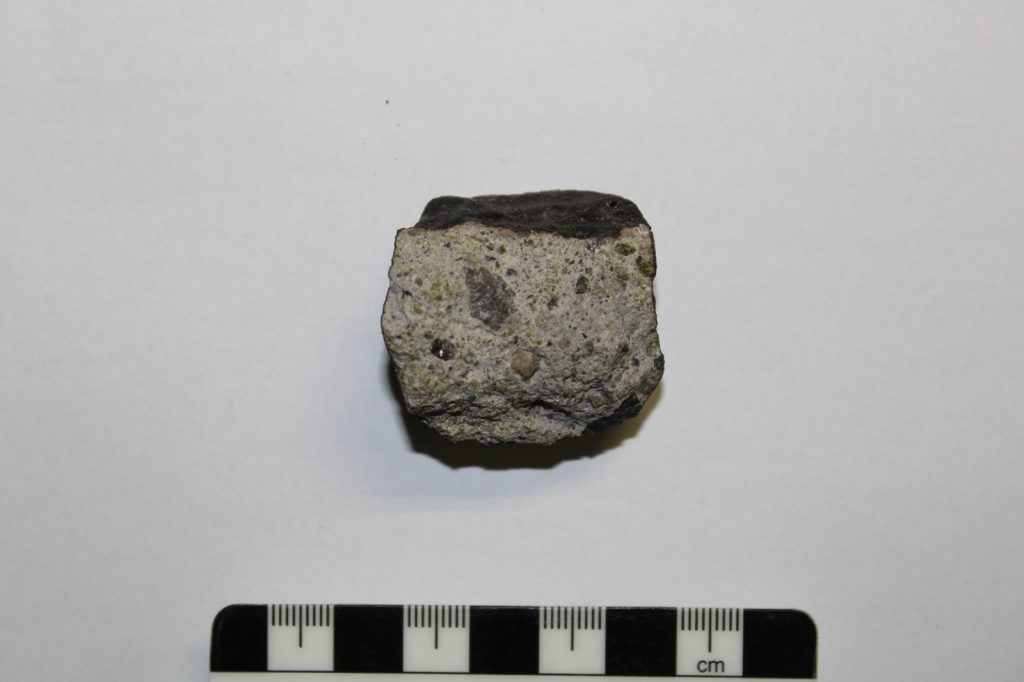
The Nqweba Meteorite is believed to be an achondritic meteorite, specifically a rare type within the Howardite-Eucrite-Diogenite (HED) group. It weighs less than 90g and had a pre-fragmentation diameter of less than 5cm. The specimens have a dark black glassy coating (fusion crust) with a light grey interior, peppered with dark-green and light-green grains and clasts. Such meteorites provide valuable insights into the inner workings of other planetary bodies, offering scientists a glimpse into processes similar to those that formed Earth’s rocks.
Collaborative Effort
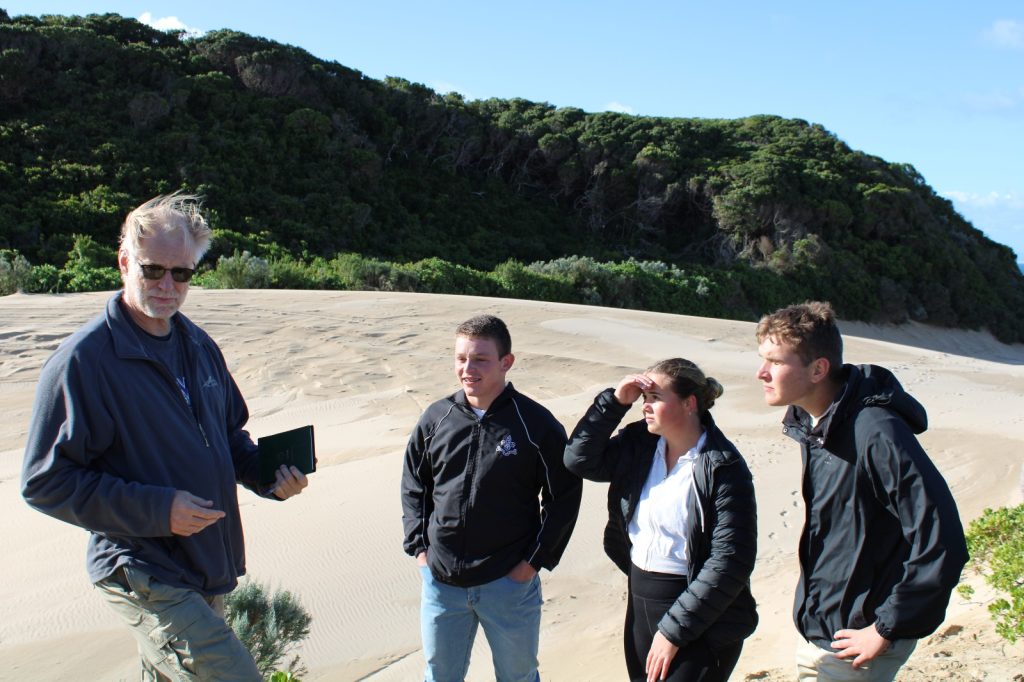
The investigation into the Nqweba Meteorite involves a coordinated effort between scientists from NMU, Rhodes University, and Wits University. In the coming weeks, a joint team of researchers and astronomers affiliated with the Astronomical Society of South Africa will collect data from official observatories and eyewitness accounts to piece together the details of the bolide event. They will also conduct extensive searches for further meteorite fragments over a wide area of rugged terrain.
“It is fitting for Rhodes University, being in the Eastern Cape, to be involved in science regarding such a historic heritage event that’s already touched the lives of so many eyewitnesses in our province,” says Dr Van Niekerk.
Next Steps
The initial scientific focus will involve microscopic and geochemical analysis of the recovered meteorite fragment to fully classify it and understand its origin. This investigation could provide insights into the meteorite’s source region in space and possibly identify its parent body. The discovery of the Nqweba Meteorite represents a significant opportunity for South African scientists to study a rare and valuable specimen from space, advancing our understanding of meteorites and their role in the broader context of planetary science.
For further information, please contact:
For Wits University
Professor Roger Gibson
Roger.gibson@wits.ac.za / +27 82 719 3823
Dr Leo Vonopartis
Leonidas.vonopartis@wits.ac.za / +27 72 711 4596
For Nelson Mandela University:
Dr Carla Dodd
Cdodd49@gmail.com / +27 67 851 4882
For Rhodes University:
Dr Deon van Niekerk: epma@ru.ac.za / +27 46 603 8316