


When she realised the increasing cases of malnutrition in Africa particularly her home country, Zambia – where 35% of children are stunted due to poor nutrition – Given Chipili felt she needed to jump into action.
A nutritional sciences lecturer at Mukuba University in Kwite, Zambia, Chipili is currently studying towards her PhD nutritional science at Stellenbosch University in Cape Town. Chipili’s research focuses, as part of the fulfilment of her doctorate degree, on food that enhances growth of infants to enable them to avoid stunting and malnutrition. Her research is arguably the first project of its kind ever conducted in Zambia.

What the project entails
Titled: Introduction of Fish Early in the Complementary Feeding Period to Improve Infant Growth in Samfya District, Luapula Province, Zambia, the project used a Randomized Controlled Trial (RCT)with trial registration (clinicaltrials.gov: NCT03993860).
“We assessed if dried fish powder made from a locally available small fresh water fish Chisense (Potamothrissa acutirostris) given as an early complementary food can improve growth of infants in a rural fishing community of Samfya district in Zambia. The main complementary foods given to children in this community are from plant sources usually porridge made from cassava or maize served plain with salt,” said Chipili.
“The current research project aims at contributing to the reduction of poverty levels and child mortality rates caused by under-nutrition. Since we are using locally available fish that is easily accessible and affordable to the community, we also hope that the intervention will be sustainable even after the project. If successful, this will be recommended to other countries in the world with high prevalence of stunting where fish is highly consumed.”
Reducing children deathrate
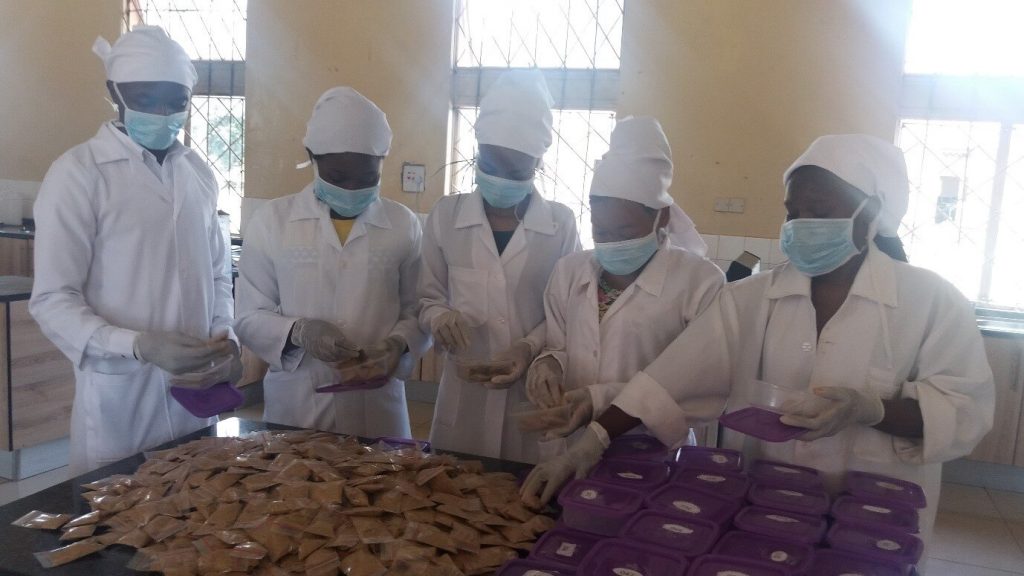
We gave 12g fish powder containing 7.6g protein per day to infants in the intervention group, she added. The mothers added fish powder to any food that was available for 6 months. They then monitored their monthly growth compared to infants who did not receive the fish powder for a period of six months.
“The current research project aims at contributing to the reduction of poverty levels and child mortality rates caused by under-nutrition. Since we are using locally available fish that is easily accessible and affordable to the community, we also hope that the intervention will be sustainable even after the project. If successful, this will be recommended to other countries in the world with high prevalence of stunting where fish is highly consumed,” said Chipili.
Major public health concerns
According to Chipili, malnutrition among children younger than five years is one of the major public health concerns. Key findings by three global bodies, notably, UNICEF, WHO and World Bank show that, in 2019, 144 million (21.3%) children were stunted, 47 million (6.9%) were wasted and 38 million (5.6%) were overweight globally, she noted. Most of these children are found in Africa and Asia and Chipili observed that in Africa alone, 40% of children below the age of 5 are stunted, 27% wasted and 24% are overweight.
Exposing children from common infections
Nearly half of all deaths in children below the age of five are attributable to under-nutrition. Chipili said under-nutrition puts children at greater risk of dying from common infections, increases the frequency and severity of such infections, and delays recovery.
Stunting (low height-for-age) is a form of malnutrition caused by poor nutrition in-utero and early childhood also known as the first 1000s days of a child’s life, explained Chipili. She added that stunting negatively affects cognitive development, reduces school performance, and lowers economic productivity and maternal outcomes in later life.
Complementary feeding
In childhood, according to Chipili, stunting is also associated with non-communicable diseases in adulthood. “It is therefore recommended that appropriate interventions should be taken in order to maintain adequate nutrition and prevent stunted growth in under-five children,” said Chipili She said in Zambia where the prevalence of stunting accounts for 35% specifically among children in the rural areas protein sourced from animals has been recommended. Chipili said this is highly recommended in early complementary feeding in low-income countries to improve linear growth of children.

