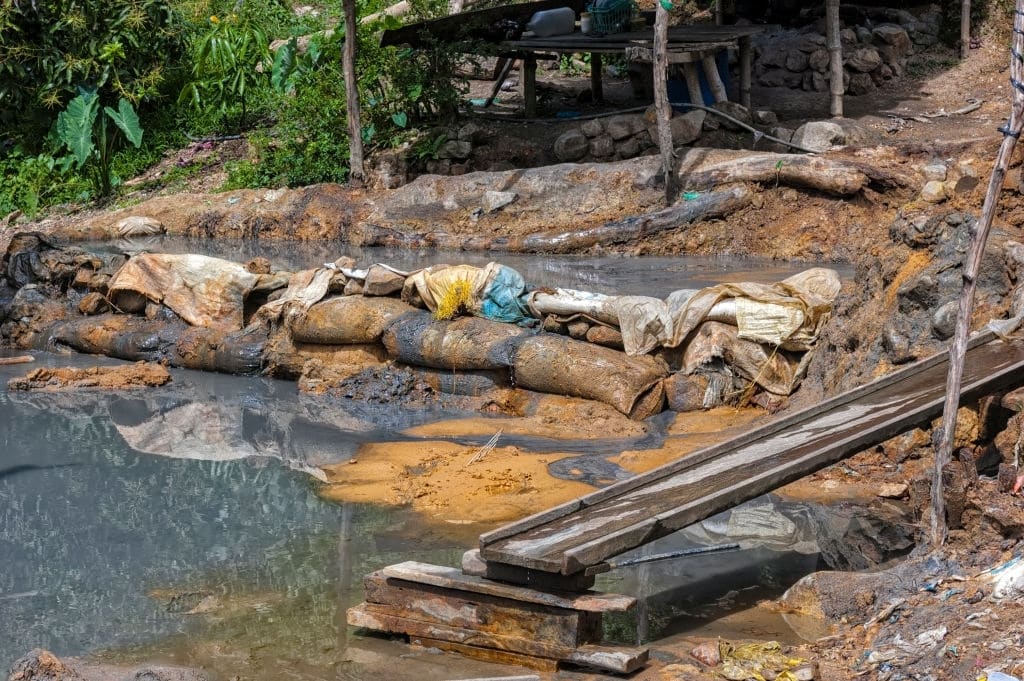
South Africa is one of the countries still suffering from the negative impact and toxic legacy of the past 120 years of mining activities. Some of these effects include the contamination of groundwater and the abandoned mine dumps and tailings scattered around the Witwatersrand region.
Rehabilitation programme
There were also disturbing reports that most old mining shafts and tunnels have been filled up with acid mine water which has been flagged as another ticking health and environmental time-bomb. However, experts say with sustainable rehabilitation programme these effects can be substantially reversed and the productive value of the soil around the deserted mine can be restored.
One of these experts who can help achieve this objective is Professor Ntebogeng Mokgalaka, a top academic and scientist at Tshwane University Technology with a C-rating from the National Research Foundation. Mokgalaka’s area of specialisation is phytoremediation, focusing on plants’ response to salt and drought stress, plant secondary metabolism, efficacy of medicinal plants exposed to abiotic stress.
Phytoremediation
For the past 10 years Mokgalaka has been researching how green technologies can be deployed to restore the soil affected by mining as well how medicinal plants respond to drought and salt stress. The objectives of her research include:
- using phytoremediation, a green technology to remove toxic metals and metalloids from the environment;
- elucidating the mechanisms of metal uptake by living plants by studying physiological, cellular and molecular changes on metal-stressed plants;
- studying the response of medicinal plants to drought and salt stress, testing the efficacy of secondary metabolites and isolating and elucidating the structures of novel compounds in drought and salt stressed plants;
- using arbuscular mycorrhizal fungi to enhance the phytoremediation potential of plants;
- removal of toxic metals and metalloids from water using low cost and renewable natural and waste materials biosorbents and
- analysis of trace elements in environmental samples

Toxic mining waste
Mokgalaka believes that the hazardous nature of the mine tailings is posing a serious threat to human health and to animals living in the vicinity. Therefore, she said, rehabilitation and re-vegetation of these mined lands is necessary, although difficult for pollution control and long-term stability of the soil surface.
“The effects of drought and salt stress on South African indigenous medicinal and aromatic plants have not been extensively studied. Drought and salinity have adverse effects on the growth and productivity of aromatic and medicinal plants as well as the secondary metabolites produced by these plants”.
Mokgalaka said the current mining activities produce tons of toxic waste annually, thus necessitating phytoremediation strategies to be developed during mining and post-closure. Phytoremediation technologies use living plants to clean up soil, air, and water contaminated with hazardous contaminants, she explained. The effects of drought and salt stress on South African indigenous medicinal and aromatic plants have not been extensively studied. Drought and salinity have adverse effects on the growth and productivity of aromatic and medicinal plants as well as the secondary metabolites produced by these plants, added Mokgalaka.
Medicinal plant extracts
There is, however, limited knowledge about the efficacy of the extracts derived from medicinal plants growing under abiotic stress and the profile of essential oils derived from aromatic plants growing under drought and salt stress, said Mokgalaka. To assess the efficacy of extracts derived from plants growing under abiotic stress, pharmacological properties such as antioxidant, anticancer and antimicrobial, antibacterial, antifungal and antiviral activities must be investigated, she added.