


Cataract is considered one of the leading causes of visual impairments and blindness in South Africa. According to experts this condition contributes about 50% of blindness in the country. Yet the country is failing to meet the required national targets, which should be at least 2 000 per million per year to ensure cataract blindness is eliminated.
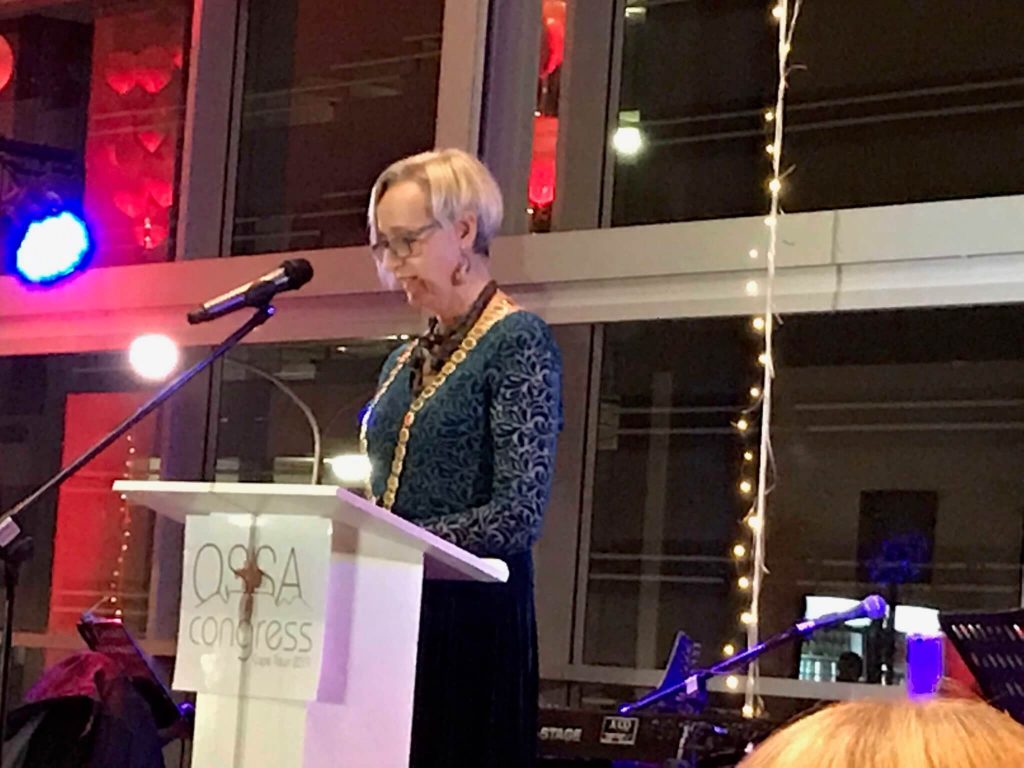
One of the experts, whose calling is to ensure the targets are met and that fewer people lose their sight as a result of cataract, is Professor Linda Visser. Given her contribution and the vast experience as an ophthalmologist, she was recently appointed head of the Ophthalmology Division at Stellenbosch at Stellenbosch University.
Not only will she use her new position to deepen her knowledge in the field but it is anticipated this achievement will serve as inspiration to more young women to pursue ophthalmology as a career of choice.
Rewarding career
Professor Visser says ophthalmologists play a crucial role not only in helping people regain their sight but they also assist people to become economically active by going back to work. She says she finds it rewarding when she sees joy in the face of a patient who has just undergone cataract or retinal detachment surgery.
Professor Visser’s area of speciality is performing vitreoretinal surgery but she has always been interested in retinal complications of HIV, especially CMV retinitis, as well as progressive outer retinal necrosis (PORN), toxoplasmosis and TB.
Around 2008 South Africa became part of the third wave of retinopathy of prematurity (ROP) and she felt it was an area that needed research and she delved into it. “More recently diabetic retinopathy has increased to such an extent that I have also started doing research on this,” she says.
Challenges
But Professor Visser says there are also challenges facing the sector and these include the neglect of the industry and the increase in diabetes. Said Visser: “Ophthalmology is considered a small section of medicine because the eye is small. This leads to this specialist area being regularly neglected, underestimated and underfunded, and also to theatre lists being restricted more than other specialist areas in times of crises such as COVID-19. Few people realise that cataract surgery worldwide is done more than any other surgery and is also the most cost effective.”
The other challenge “is the exponential increase in diabetes”. According to Professor Visser: “The biggest complication of the under-treatment of diabetes is diabetic retinopathy, which leads to blindness in young people. And then, of course, there are two further major problems – trauma and HIV – that can both lead to blindness. The eye is seen as a soft target in interpersonal violence and especially gender-based violence.”
Proving uncle wrong
She says she became an ophthalmologist by chance; she first studied to become an orthopaedic surgeon after her uncle, who was also in the same discipline, teased her that women cannot make it as orthopaedic surgeons. “I decided I was going to prove him wrong,” says the professor. Her uncle suggested rather chauvinistically that she should rather do something easier such as ophthalmology.
And she proved her uncle wrong by completing her undergraduate at the University of Pretoria degree and post-graduate degree at the University of KwaZulu-Natal. But after just six months in the orthopaedic industry she realised she was not cut to work with hammers and chisels.
Jerusalema Dance Challenge
Professor Visser, with the help of colleagues, spearheaded an awareness campaign, to highlight the backlog in cataract surgery and gender-based violence. They used dance routine as a tool to drive home the message while also incorporating other cultures’ styles or dancing and this won them the KwaZulu-Natal Health Department’s Jerusalema Dance challenge.
She is also a board member of the World Sight Foundation and she is involved in the international organisation ICROP-3, which recently published the new ROP classification, as well as SIBA (Stop Infant Blindness in Africa), which tackles ROP in sub-Saharan Africa. In addition, she is a member of the Vision Academy, a group of international vitreoretinal specialists researching six or seven topics in the retinal environment each year and they jointly publish an article on each.


