


Rhiza Babuyile calls for firmer policy direction and resources at an ECD level
The gap between the performance of well-resourced private school matriculants and that of the majority of public schools in South Africa began over 12 years ago when most of these students were toddlers.
This International Day of Education, 24 January 2002, Rhiza Babuyile, an NGO focused on early childhood development (ECD) and community development is urging for firmer policy direction and resources directed towards enriching the first six years of children’s lives. This is in order to prepare children from any background for equitable access to quality education in the long road to matric.
The Independent Examination Board (IEB) class of 2021 achieved a 98.39% pass rate
with 89.2% of candidates qualifying for a bachelors degree. Comparatively the public schooling system produced a 76,4% pass rate with only 36.4% qualifying for a bachelors degree.
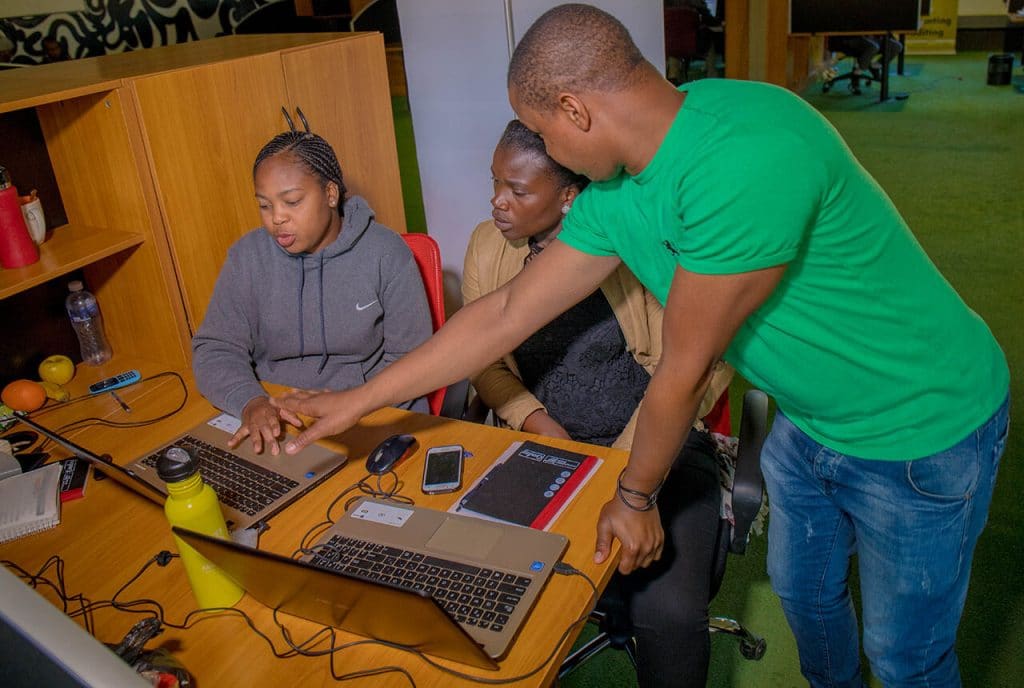
A myriad of factors determines the progress of learning in young children. This is the stage that sets the tone for the rest of a person’s life including their future career prospects.
“We have seen through our work the intricate requirements it takes to develop the learning mind from an early age. It is especially hard to achieve the expected learning milestones on time when children are not receiving sufficient nutrition, play time and emotional security from home,” says Rashuping Morake, CEO of Rhiza Babuyile. “That is why integrated community-based programs are essential to the development of young children in poorer environments where these basic needs are not met on time.”
Both public and private sector schools suffered learning losses as a result of the pandemic over the last two years. However, it is apparent that lower resourced schools which make up the bulk of public schooling, saw more of this reflected in the matric results, Morake has observed.
Last year the Department of Basic Education raised the alarm that between 50% and 75% of a normal year’s worth of learning was lost during 2020. This indicates that hybrid and online schooling in its current form did not work for the majority of South African learners, and should these methods be the future of education policy, much work needs to be done to balance out this delicate equation.
Access to the correct tools and resources has been an issue for South African schools even before the pandemic forced a premature entry into the paperless classroom era. Despite the government spending over 20% of its budget on the education system, it is clear that resource allocation alone won’t solve these problems without proper planning and integration with communities and other stakeholders.

While the Covid-19 pandemic might partially explain the deepened disparities seen in the public and private education system in South Africa, these issues are long-standing and have roots in the socio-political injustices of the past. Schools which serve poorer communities have remained under-resourced long after the dawn of democracy in this country when racial and class divisions were stark and clearly defined in society.
Despite South Africa being considered an upper middle-income country whose economy accounts for over 75% of the entire SADC’s GDP, 40% of its young children experience abject poverty. Scholars have argued that in order to achieve long term economic sustainability goals, provincial governments need to invest heavily in well-structured and sustainable ECD programmes.
Our educational programme is primarily focused on ECD centres and the reason for this is because the education within township based ECDs is highly informal, which effectively means that children in townships often only receive formal education from the age seven, when schooling becomes compulsory. Children often skip important milestones by this age because of a lack of proper ECD schooling. As soon as they enter primary school they are behind their more fortunate peers in physical, intellectual, and emotional development.
If South Africa wants to make the most of the hard work it takes young adults to reach this milestone, a heavy emphasis on goals-oriented skills development and career support is required at policy level as well as in the spirits of communities.
Rhiza Babuyile plans to train over 300 young people this year in Information Technology, agriculture and other disciplines. We wish matric students who did their best despite dire circumstances all the best in their efforts to be the best versions of themselves in their lives and careers.


