


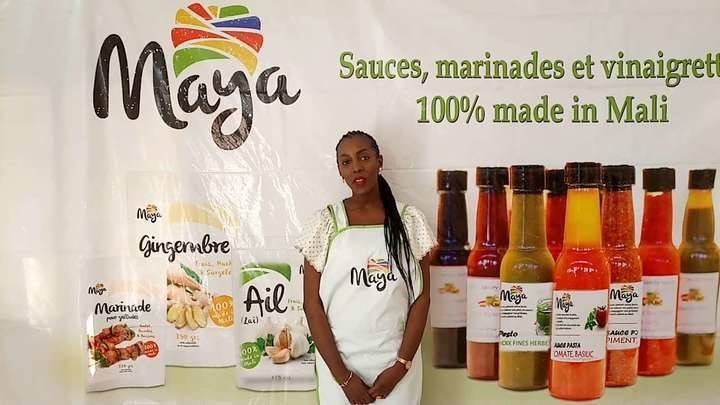
Empowering young people, particularly women and the local farming community and ensuring food security are primary motivators for Seynabou Dieng who founded MAYA in 2017. This food processing company in Mali in Africa, was named after Deng’s former cook who influenced its establishment.
Integration into food value chain
MAYA’s family recipes use raw materials from locally sourced agricultural products, incorporating small producers into the entire food production system. Dieng sources and distributes these products, not only in her home country, but also in Senegal, Burkina Faso and Ivory Coast on the African continent. This led to significant growth and sustainability of small scale farmers enabled to buy their own seeds and support their families. .
Empowering the youth
Dieng initially assembled a team of dynamic young people as interns and who had since been employed on permanent basis. She also ensures that she cultivates a strong corporate culture among them and encourages them to be agents of change, instiling in them values such as resilience, self-transcendence, flexibility and autonomy.
To date, MAYA has processed 78 tons of vegetables and cereals, a third obtained directly from partner farmers whose revenue represents not less than 20% of each product’s price. MAYA’s products are easy to prepare ensuring women spend less time in the kitchen to focus on other pressing commitments. Some of the products include:
- spiced breadcrumbs
- ginger chili paste
- local pancake and doughnut mixes
- vegetable broth
- pre-cooked fonio
- Baobab and guava instant juice.
Where it all began
Dieng spent a decade in France after completing her high school. Upon her return, she said she was shocked to see that all the food Malians consume was imported. Local farmers were forced to throw away their own produce because of low demand, worsened by lack of preservation equipment. Her meeting with her former cook, Maya, saw them sharing his knowledge, not only of recipes, but of the dynamics of the informal market and how it operates.
The two ultimately teamed up and every weekend bought vegetables, herbs and spices from the local market. To avoid discarding leftovers they cut, mixed and packaged them in small bags in the fridge. Dieng started to share their processed food on Facebook and it soon went viral generating much public interest as people wanted to purchase their products. Since then, has taken off and continues to feature an upward growth trajectory.
Qualifications
This entrepreneurial lady is not only passionate about her business, but is also adequately qualified. She obtained an economics degree from the Sorbonne University in Paris, before enrolling for a Master’s degree in strategy and international marketing at ESSEC. Upon completion, she decided to return to Mali to contribute to her country’s development. She says she was inspired in Brazil where she learnt that local consumption was the a basis for the growth and development of any country.
Link between food and culture
She believes the importance of food goes beyond nourishment, but is also about connecting people with their cultural heritage and enables them to appreciate their histories. However, people in Mali did not see the connection as most food came from elsewhere. She says 75% of the country’s 20 million people depend on agriculture, yet agriculture generates only 38% of the country’s GDP. This means the food industry in Mali is underdeveloped and available and accessible food does not meet their expectations for taste and value.
Inspiring women
This contributed to poverty and youth unemployment. Dieng strongly believes one way of tackling this challenge is not only through the supply of locally produced food products, but also by instilling a sense of belief in local women as change drivers. She hopes MAYA will inspire other women to start their own initiatives and contribute towards a thriving West African food industry. She is also considering expanding her enterprise to cater for a bigger market in Africa.

